Hospice Complexity, Made Clear
Hospice Synopsis turns complex hospice topics into practical, compassionate guidance. Learn one blog at a time through curated pathways designed around your interests. Follow your progress, explore new articles each week, and help contact us so we can serve you better.
Pathways
Each series begins with the end in mind: hospice as a promise kept. Read in order, each piece develops the principles, clinical judgment, and human commitment required to keep that promise.
A curated reading order.
A curated reading order.
A curated reading order.
A curated reading order.
A curated reading order.
A curated reading order.
A curated reading order.
A curated reading order.
A curated reading order.
A curated reading order.
A curated reading order.
A curated reading order.
New Blogs
A hospice physician explains how beginning with the end in mind helps clinicians align care with what matters most in hospice.
A hospice physician explains why hospice is not a place, but a promise to provide the right kind of care when cure is no longer the goal.
Hospice Synopsis gives clinicians practical language, evidence, and tools for clearer decisions near the end of life.
The Big R² is a Hospice Synopsis framework that helps hospice clinicians identify what matters most and turn that priority into one clear next action.
Learn which phrases can damage trust in hospice conversations and what clinicians can say instead to preserve clarity, dignity, and connection.
Understand how hospice and palliative care overlap, where they differ, and how clinicians can guide the transition before a crisis.
Learn how clear forecasts, realistic service expectations, and simple care plans can reduce caregiver distress and protect trust in hospice.
Learn how four common illness trajectories can help hospice clinicians anticipate decline, guide families, and plan care before a crisis.
Learn how a strong hospice interdisciplinary group aligns the care plan, includes every discipline, and turns team discussion into coordinated care.
See how hospice teams turn a patient’s idea of a good day into meaningful, person-centered care through curiosity, teamwork, and follow-through.
Learn how PPS, FAST, nutrition trends, and clinical narrative help hospice teams describe decline without relying on any score alone.
Learn how consistent BMI, mid-arm circumference, and weight trends can clarify nutritional decline and strengthen hospice documentation.
Learn how to pair NYHA functional class with observed function and the clinical picture to document advanced heart failure in hospice.
Explore how longer survival shifted dying from sudden infection toward chronic disease and frailty, and why function matters in hospice assessment.
Learn how death literacy helps patients, families, and hospice teams prepare for dying through clear communication, practical knowledge, and community support.
Trace death-positive traditions from Ars Moriendi to modern hospice and learn why clear language makes dying more teachable and less isolating.
Learn how lifelong coping patterns, beliefs, relationships, and family dynamics can shape hospice decisions and the experience of dying.
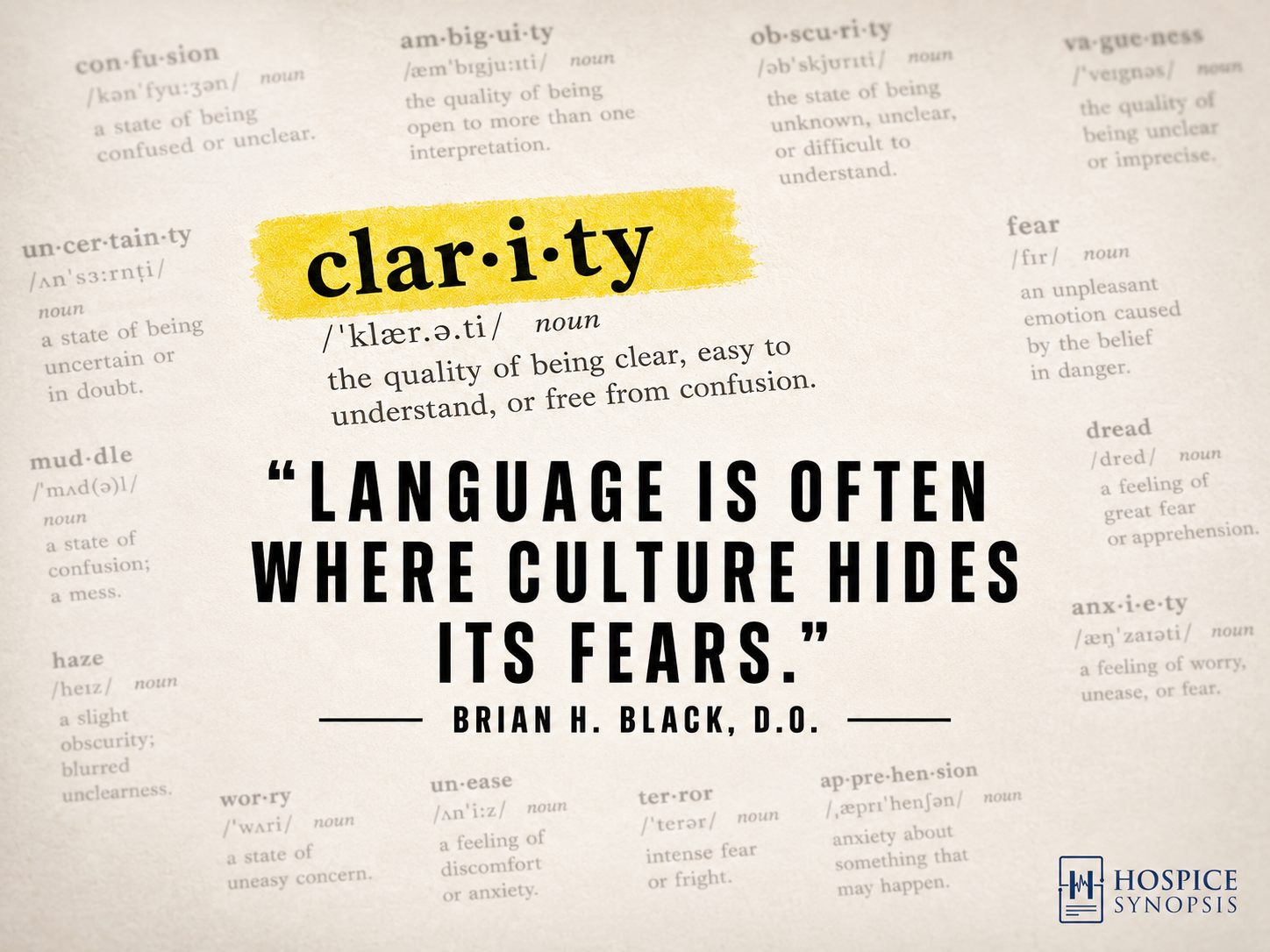
Explore why people use euphemisms for death and how hospice clinicians can balance cultural humility with clear, compassionate language.
Learn how death euphemisms vary across cultures and how hospice teams can honor sacred language while communicating clearly.
A poem and reflection on the many ways people avoid saying die and why clear language still matters at the bedside.
A hospice physician reflects on the first Code Blue and why debriefing, mentorship, ritual, and shared grief are clinical skills.
Learn how the Hospice Synopsis S.A.D. framework turns late bedside signs into team action and family preparation without promising an exact time of death.
Learn what to do, what to avoid, and how hospice teams can bring calm, clarity, and respect to the final hours.
Explore the Wind Phone and other grief rituals that help families preserve connection, meaning, and voice after a death.